When Your Workout Partner Takes Their Last Rep at Your Gym
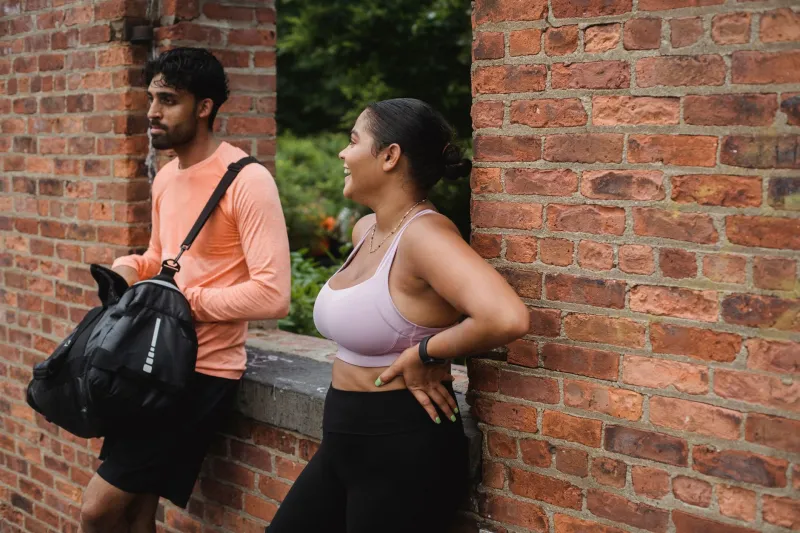
There's a particular kind of quiet that settles over a gym after someone you trained with regularly stops showing up. Their parking spot sits empty on Tuesday mornings. The squat rack you both claimed like territorial animals is just... available now. Nobody's hogging the foam roller you used to argue over. It should feel like a win. It doesn't.
When a gym partner moves away, changes jobs, or simply pivots into a different season of life, the ripple effect catches most people off guard. You didn't just lose a spotter. You lost a ritual, a rhythm, and in a lot of cases, one of the more honest relationships in your weekly life.
It's a Real Loss — Let's Stop Pretending Otherwise
American culture doesn't have great language for this kind of grief. We reserve the heavy emotional vocabulary for romantic breakups, family estrangements, or the death of a pet. But the end of a consistent gym partnership? That tends to get minimized. "You'll find someone else." "It's just working out." "Text them sometime."
Except it's rarely just working out. Research on social fitness has consistently shown that the people we exercise with become anchors in our weekly emotional landscape. They're the ones who saw you struggle through a plateau for six weeks straight. They celebrated the PR nobody else in your life fully understood. They showed up on the mornings when you almost didn't, and somehow that mattered more than a hundred motivational quotes ever could.
When that person relocates to Austin for a tech job or moves back home to Pittsburgh to help aging parents, the loss is layered. There's the practical disruption — suddenly your programming feels unmoored, your accountability has a gap in it, and Wednesdays feel weirdly long. But underneath that is something more personal: the specific intimacy of shared effort, now interrupted.
The Fitness Fallout Is Real, Too
Beyond the emotional side, there's a tangible performance dip that many people experience after losing a consistent training partner. Studies on exercise adherence have found that social accountability is one of the strongest predictors of whether someone sticks to a fitness routine. When that external anchor disappears, the internal motivation has to work a lot harder — and for a while, it often isn't quite up to the task.
You might find yourself skipping sessions you'd never have skipped before. Your rest periods stretch longer because there's no one watching the clock. You drift toward easier variations of exercises because no one's there to call you out on it. None of this makes you weak. It makes you human, and it makes the case for why gym communities matter as much as gym equipment.
Give yourself a realistic adjustment window. Expect a few weeks of friction. Don't interpret the motivation dip as a permanent character flaw.
Keeping the Connection Across Distance
Here's the thing about gym friendships: they're surprisingly portable, if you're intentional about it. The relationship didn't live in the building — it lived in the dynamic between two people. That part doesn't have to end just because one of you crossed a state line.
A few things that actually work:
Shared programming apps. Platforms like Trainerize, TrueCoach, or even just a shared Google Sheet let you follow similar training blocks and compare notes. You're not lifting together, but you're still in the same story.
Accountability check-ins with teeth. A casual "let me know how your workout goes" almost never works long-term. Build in something more structured — a Sunday evening voice memo swap, a weekly photo of your training log, a monthly video call where you actually review what you've both been doing. The specificity is what makes it stick.
Plan a training trip. If geography allows, schedule a long weekend where you actually train together again — a destination race, a fitness retreat, or just visiting their new city and hitting a local gym. Having something on the calendar transforms the relationship from "fading memory" to "ongoing story."
Don't let it go fully silent. The biggest threat to long-distance gym friendships isn't distance — it's the slow drift of not quite reaching out. A meme about leg day, a quick reaction to their Instagram story, a three-line text about a lift that reminded you of them. Small things accumulate into something that keeps the thread alive.
Finding New Training Partners Without Replacing the Old One
At some point, you're going to need to rebuild the social layer of your training life at your home gym. This part can feel weirdly disloyal, like you're trying to swap out a friend for a newer model. Reframe it: you're not replacing anyone. You're expanding a community that has room for more than one meaningful relationship.
The key is patience and low stakes. Don't announce to the gym floor that you're "looking for a new partner" like you're posting a Craigslist ad. Instead, just start being more present. Offer a spot. Ask someone how their programming is going. Compliment a lift you genuinely noticed. The gym floor rewards consistency and openness in equal measure — show both, and the connections tend to follow.
Also worth acknowledging: your next gym partner probably won't fill the same role as the last one, and that's fine. Some partners are great for heavy lifting days. Others are better for the long, grindy conditioning sessions you'd otherwise bail on. Some are the ones you actually talk to; others are comfortable silences that still somehow feel like company. The gym community you're building isn't a single relationship — it's a constellation of them.
The Third Place Holds Space for All of It
One of the quieter functions of a gym that actually functions as a community — not just a building with equipment — is that it holds space for transitions like this one. The regulars around you have all weathered their own versions of this story. Someone they trained with moved away. Someone they counted on stopped coming in. They found their footing again, maybe a little differently than before, and kept showing up.
That continuity — the gym itself as a constant even when the people inside it shift — is part of what makes a third place worth belonging to. You're not just there to lift. You're there to be known, over time, through all the seasons of your fitness life. That includes the ones where your usual Tuesday morning partner is now 1,400 miles away, texting you about their new gym's terrible lighting.
Grieve the change. Keep the friendship. And eventually, let the floor introduce you to whoever's next.