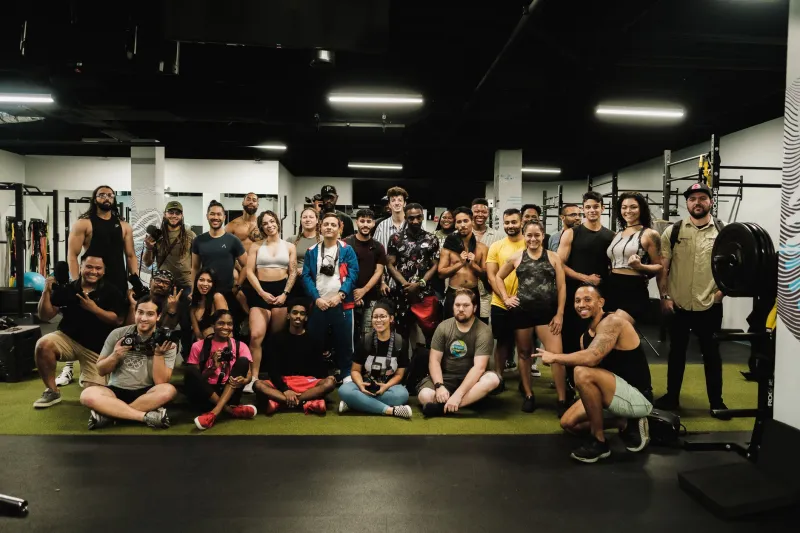
Between Sets and Secrets: The Gym Regular Who Became Everyone's Safe Person

Nobody puts "unofficial therapist" on their gym membership application. There's no orientation session for it, no lanyard, no extra charge on the monthly dues. And yet, if you've been a regular at the same gym long enough, there's a decent chance you've become exactly that for someone — maybe for several someones.
It starts small. A comment about a rough week. A sigh before the first set. A joke that lands a little too close to the truth. And before you know it, you're the person they look for when they walk in the door. The one who notices when something's off. The one they tell things to that they haven't told anyone else.
Gyms, it turns out, are surprisingly good at making people open up.
Why the Weight Room Makes You Vulnerable
There's something about the physical act of exertion that lowers the walls we spend the rest of our day maintaining. When you're pushing through a hard set, your body is already in a kind of honest mode — you can't fake your way through a heavy deadlift. That same honesty has a way of bleeding into conversation.
Add to that the rhythm of the gym environment: the repetition, the shared struggle, the fact that you're side by side rather than face to face. Psychologists have long noted that parallel activity — doing something alongside someone rather than sitting across from them — makes people more likely to open up. It's why kids talk to parents more freely on car rides than at the dinner table. The gym operates on the same principle.
Then there's the consistency factor. You see the same people three, four, five times a week. Over months, over years. That kind of steady, low-stakes presence builds a level of familiarity that most adult friendships never quite reach. In a culture where it's genuinely hard to make close friends after your mid-twenties, the gym fills a gap that a lot of people didn't even realize was there.
The Conversations That Happen Between Sets
Ask anyone who's been a long-term regular at a community gym and they'll tell you: the real stuff comes out in the in-between moments. Not during the workout itself, but in the thirty-second rest between sets. In the parking lot stretch after a session. At the water fountain. In the five minutes before class starts.
"I found out my training partner was going through a divorce because she started showing up earlier," says one member at a mid-sized independent gym in the Midwest. "She just needed somewhere to be before the rest of her day started. We never sat down and had a big conversation. It just came out in pieces, over weeks. I think that's how she needed it to happen."
That piecemeal quality is part of what makes gym conversations different from therapy, from friendship dinners, from the kind of processing people do with close family. There's no pressure to arrive at a resolution. You can say something heavy and then pick up the barbell and move on. The workout itself becomes a kind of pressure valve.
The Unspoken Responsibility
Here's the part nobody really talks about: being someone's safe person at the gym is meaningful, but it also carries weight of its own.
When you're the consistent presence someone counts on, your absence gets noticed. When you're having your own hard week, you sometimes still end up being the one who listens. When someone shares something vulnerable with you, you carry a piece of that — whether you signed up for it or not.
It's a form of emotional labor, and it's almost entirely invisible. The fitness industry talks endlessly about physical progress, personal records, transformation photos. It almost never talks about the member who talked a friend through a panic attack in the locker room, or who spent forty minutes after their own workout just sitting with someone who needed company.
"I don't think of myself as doing anything special," says one long-time member at a community-focused gym in the Pacific Northwest. "But I've had people tell me later that showing up that day, that specific day, made a real difference for them. That's a lot to hold onto. In a good way, mostly. But it's still a lot."
The good way is real. There's genuine meaning in being someone's anchor. But it's worth naming the weight of it honestly, because pretending it doesn't exist doesn't make it lighter.
The Gym as a Third Place — for Feelings, Too
The concept of the "third place" — somewhere that isn't home, isn't work, but belongs to you anyway — has always been about more than just physical space. Ray Oldenburg, who popularized the idea, described third places as essential to community life precisely because they're low-pressure, inclusive, and consistent. They're where you go to be a person, not a role.
The gym, at its best, is exactly that. And when a place becomes genuinely yours — when you've sweated through hard mornings there, when you've watched people hit goals and fall short and come back anyway — it becomes a place where the emotional guard comes down in ways it doesn't elsewhere.
That's what creates these unofficial therapist relationships. It's not that gyms attract unusually empathetic people, though some certainly do. It's that the environment itself builds the conditions for real human connection. The physical vulnerability of exercise bleeds into emotional vulnerability. The repetition of showing up creates trust. The side-by-side nature of the work makes talking feel lower stakes.
And somewhere in all of that, someone becomes the person you look for when you walk in the door.
What to Do With the Weight You're Carrying
If you're reading this and recognizing yourself — as the person who listens, the one who checks in, the unofficial safe person for someone in your gym community — a few things are worth sitting with.
First: what you're doing matters more than you probably realize. Consistent, low-drama presence is rare in adult life. You're offering something genuinely valuable.
Second: your own needs count too. Being someone's anchor doesn't mean you can't also be adrift sometimes. The best gym communities hold space for that — the regulars who know you well enough to notice when you're the one who needs a check-in.
And third: the conversations that happen between sets, the things said at the water fountain, the heavy stuff shared in the parking lot — that's not a distraction from what the gym is for. That is what the gym is for, at least partly. The reps are how you get stronger. The people are why you keep coming back.
Community isn't a feature. It's the whole point.