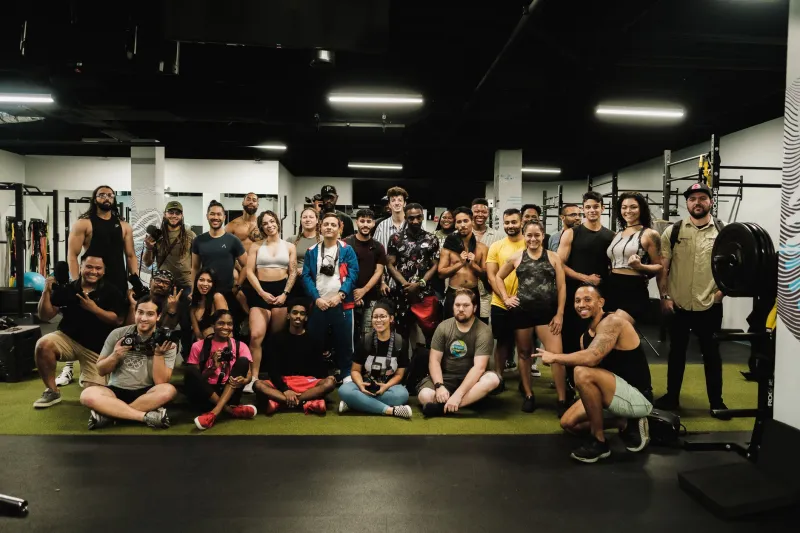
Beyond the Barbell: Why the Best Gyms Are Now Worth Visiting for the Food

For most of gym history, the nutrition situation looked like this: a vending machine humming in the corner, a sad shelf of protein bars near the front desk, maybe a blender bottle station if you were lucky. You finished your workout, grabbed your stuff, and left. That was the deal.
But something has been shifting. Walk into certain gyms today — particularly independent spots and boutique studios in cities like Austin, Denver, Nashville, and Brooklyn — and you'll find something that looks a lot less like a locker room and a lot more like a place you'd actually want to eat lunch. Smoothie bowls made to order. Cold brew on tap. A long communal table where people are still talking forty minutes after their class ended.
This isn't an accident. It's a philosophy.
The Third Place Problem — Solved With a Blender
The idea of a "third place" — somewhere between home and work where people gather without an agenda — has always been the backbone of what we're building here at Third Place Gym. Coffee shops figured this out decades ago. Bookstores tried. Bars have always known it.
Gyms are late to the party, but they're arriving with something genuinely compelling: built-in community. The people who show up at 6 a.m. on a Tuesday already have something in common. They've already sweated next to each other, spotted each other, nodded at each other through the mirror for months. The social foundation is there. What was missing was a reason to stay.
Food, it turns out, is an incredibly good reason to stay.
There's real behavioral science behind this. Sharing a meal — or even just a post-workout smoothie — activates social bonding in ways that casual conversation in a locker room simply doesn't. It extends the interaction past the transactional. You stop being "the guy who does pull-ups near the window" and start being someone whose name people actually remember.
What These Spaces Actually Look Like
The gyms doing this well aren't just slapping a juice bar next to the front desk and calling it a day. They're thinking about the full arc of a member's visit — from the moment they walk in to the moment they actually leave, which, if you've designed the space right, is a lot later than you'd expect.
Some of the more intentional setups include:
Dedicated café zones that are physically separated from the gym floor — quieter, with better lighting, actual seating that isn't a bench press rack. These spaces signal that lingering is welcome, not just tolerated.
Menus that take nutrition seriously without being preachy about it. Acai bowls and protein smoothies are fine, but the gyms getting the most traction are offering things like grain bowls, egg-based breakfast items, and locally sourced coffee. When the food is actually good, people come back for it specifically.
Communal tables and bar-style seating that encourage strangers to sit near each other rather than retreating to corners. The layout matters more than most gym owners realize. A long shared table is an invitation. Four two-tops pushed against the wall are a dismissal.
Rotating local vendors or pop-ups that give members a reason to show up on days they might not otherwise. A local cold brew brand doing a Saturday tasting. A registered dietitian running a monthly Q&A over smoothies. These events layer meaning onto what might otherwise just be a protein shake.
The Retention Angle Nobody Talks About Enough
Here's the business case, even if you find pure business cases boring: gyms that give members reasons to socialize retain those members at significantly higher rates. That's not a hunch — that's a pattern that shows up consistently in how independent gyms outperform chains.
Big box gyms sell access. What they can't easily sell is belonging. And belonging, more often than not, is built around shared experiences that extend past the workout itself. When someone's gym is also where they grab their Saturday morning coffee and run into three people they actually like, canceling that membership becomes socially costly, not just financially inconvenient.
The post-workout hang isn't a perk. It's infrastructure.
Not Every Gym Needs a Full Kitchen
It's worth being honest here: not every facility has the square footage or the budget to build out a full café operation. And that's okay. The principle scales down.
A thoughtfully stocked fridge near the entrance with local kombucha, quality protein drinks, and a few real food options does more work than a wall of supplements. A couple of stools at a counter near a window, a good playlist, and a staff member who actually knows your name — that's a third place, even without the espresso machine.
The point isn't the food specifically. The point is the message the food sends: you're welcome to stay a while.
What Members Are Actually Hungry For
Talk to people at gyms that have nailed this, and they'll tell you the same thing in different words. They don't come for the smoothies. They come because the smoothies give them a reason to stick around for a conversation they didn't know they needed. The nutrition is almost beside the point.
One member at a gym in Portland described it this way: "I've had more real conversations in the twenty minutes after class than I've had at happy hours in years. There's something about being post-workout — you're kind of open, a little vulnerable, your guard is down. Throw in a good açaí bowl and suddenly everyone's talking."
That's the thing about third places. They don't manufacture community. They just create the conditions for it to happen naturally. And right now, some of the best conditions being created in American fitness culture are happening over a blender and a communal table.
The workout gets you in the door. The food might be what makes you stay — and come back, and bring a friend, and eventually feel like you actually belong somewhere.
That's not a small thing. That's kind of the whole thing.