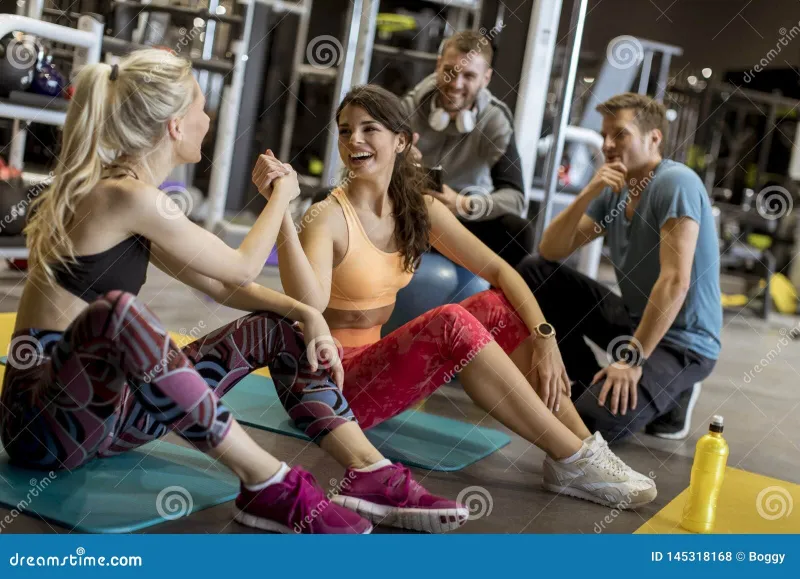
New to the Gym Floor? Here's How to Make Friends Without Making It Weird

Photo by Photo by Ryan Snaadt on Unsplash on Unsplash
There's a specific kind of loneliness that hits when you're surrounded by people but feel completely invisible. The gym can do that to you, especially in those first few weeks when everyone else seems to have their crew, their routines, and their inside jokes about the broken cable machine in the corner.
Here's the thing though: most of those people were exactly where you are right now at some point. The regulars who look so comfortable? They were once the new person trying to figure out where the paper towels were kept. Building connections at the gym isn't magic — it's mostly just showing up consistently and knowing how to read the room.
Consistency Is Your Best Opening Move
Before you say a single word to anyone, let your presence do some of the early work. Go at the same time, on the same days, as often as you can manage. People notice patterns without even trying to. After a few weeks, you become a familiar face — and familiar faces are already halfway to being friendly ones.
This matters more than most people realize. A lot of gym friendships don't start with a conversation. They start with a nod. Then a half-smile. Then a "hey" that doesn't need any context. By the time you actually strike up a real exchange, you've already established that you belong there. That removes a huge chunk of the awkwardness before it even has a chance to develop.
Read the Room (Seriously, Read It)
One of the fastest ways to make things uncomfortable is to approach someone at the wrong moment. Gym culture has its own unwritten social contract, and the first rule is pretty simple: headphones in usually means leave me alone.
That's not rudeness — it's a boundary signal, and respecting it will actually make people like you more in the long run. Same goes for someone mid-set, mid-sprint on the treadmill, or visibly locked into that "I'm counting reps in my head and if you interrupt me I'm starting over" face. You know the face.
The windows where conversation flows naturally? Between sets when someone's just sitting on a bench catching their breath. At the water fountain. In the stretching area. Before class starts. After class ends. These are the low-pressure moments where a quick comment doesn't feel like an intrusion — it feels like a natural human exchange.
Go Beyond "How Many Sets You Got?"
Look, asking if a piece of equipment is free is a perfectly valid icebreaker. But if you want to build an actual connection, you're going to need more material eventually.
The good news is you're already in a room full of shared context. Comments about the gym itself tend to land well — something about a new piece of equipment, a class you just tried, or even a lighthearted gripe about the parking lot. These kinds of observations invite a response without putting anyone on the spot.
Compliments work too, but keep them specific and fitness-related. "That squat depth is impressive" reads very differently than a vague compliment about someone's appearance. One is a peer acknowledging skill; the other can feel uncomfortable depending on how it lands. Stick to the work, not the person's body.
Asking for advice is another underrated move. Most gym regulars genuinely enjoy sharing what they know — it's part of why they're there. A simple "hey, I've been struggling with this movement, do you have a second to take a look?" can open up a real conversation. Just make sure they're not mid-set when you ask.
The Spotting Question: When to Offer, When to Back Off
Spotting is one of the more intimate acts of gym culture. You're essentially saying: I trust you with my safety, and I'm trusting you not to make this weird. So the etiquette matters.
If someone is clearly setting up for a heavy lift — loading up a barbell, adjusting their belt, chalking their hands — and there's no one else nearby, it's completely appropriate to ask if they'd like a spot. Keep it brief and low-key: "You want a spot on that?" A yes or no answer is all that's needed, and either one is fine.
Don't offer to spot someone mid-set unless they're in obvious trouble. And if someone declines, just move on without making it a thing. Not everyone wants a spotter, and that's their call.
On the flip side, if you need a spot, don't be shy about asking. It's one of the few moments in gym life where approaching a stranger is not only acceptable — it's expected. Most people will say yes, and it's a surprisingly effective way to start a conversation that actually goes somewhere.
Group Classes Are a Cheat Code
If one-on-one cold approaches feel like too much pressure, group fitness classes are genuinely one of the easiest ways to meet people. You're all suffering through the same workout together, which creates an instant sense of camaraderie. The shared experience does most of the social heavy lifting for you.
Make a habit of arriving a few minutes early and staying a few minutes after. Those are the moments when people are relaxed and chatty. You don't need a clever opener — just being present and open is enough.
Give It Time and Don't Force It
Gym friendships tend to build slowly, and that's actually a good thing. They're built on repeated, low-stakes interactions over time — which is exactly why they tend to feel so solid once they're established. You can't rush that process, and trying to speed it up usually backfires.
If you show up consistently, stay aware of social cues, and engage genuinely when the moment is right, the connections will come. And when they do, you'll realize pretty quickly that the gym stopped being just a place you go to work out. It became somewhere you actually want to be.
That's the whole point.