How Independent Gyms Are Beating the Big Chains at Their Own Game
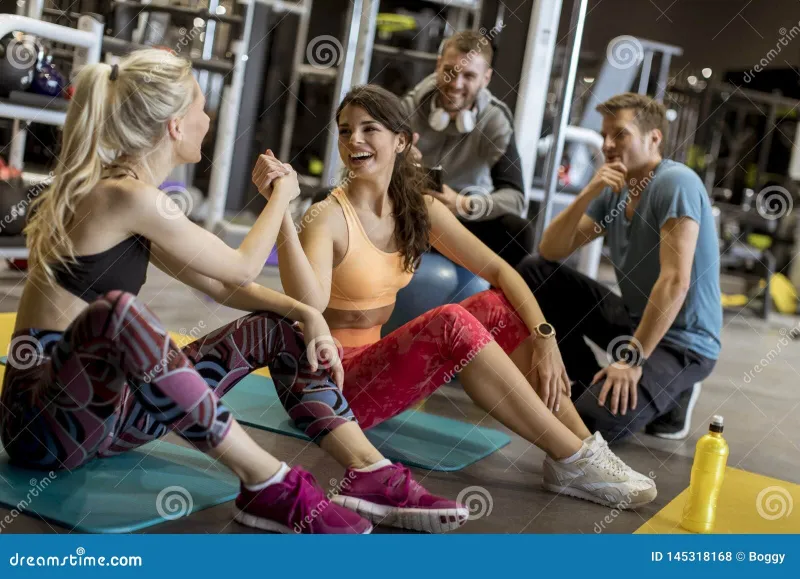
Photo: small independent gym community members talking laughing, via thumbs.dreamstime.com
Walk into a Planet Fitness or an LA Fitness on a Tuesday morning and you'll notice something. Dozens of people, earbuds in, eyes forward, moving through their routines like parallel lines that never meet. Nobody's rude. Nobody's unfriendly. They're just... separate. You could go for a year and never learn the name of the person on the treadmill next to you.
Now walk into a locally-owned gym in your city — the kind with a hand-painted logo on the wall and a whiteboard that still lists last month's member PR's. The vibe is different almost immediately. Someone waves from across the floor. The coach at the front desk remembers you skipped leg day last week. There's a group chat. There might even be a potluck on Friday.
This contrast isn't accidental. And increasingly, it's what's driving a quiet but significant shift in where Americans choose to work out.
The Numbers Don't Lie
The fitness industry took a beating during the pandemic, but the recovery told an interesting story. While several major chains filed for bankruptcy or shuttered hundreds of locations, boutique and independent gyms rebounded faster and, in many markets, emerged stronger than before. According to industry research from the International Health, Racquet & Sportsclub Association (IHRSA), boutique fitness studios have consistently outpaced traditional big-box gyms in member retention and satisfaction scores over the past several years.
Retention is the magic word here. Corporate gyms are famous for a particular business model — one that actually depends on members not showing up. When your revenue comes from bulk memberships at $10 a month, you need a lot of them, and you don't necessarily need those people walking through the door every week. Independent gyms can't afford that math. Their survival depends on members who stay, who refer friends, and who feel like they'd genuinely miss the place if it closed.
That pressure, it turns out, produces something beautiful.
What Smaller Gyms Are Actually Doing Differently
It's tempting to chalk up the independent gym's appeal to nostalgia or novelty, but that undersells what's actually happening. These facilities are making deliberate, strategic choices that corporate locations structurally can't replicate.
Coaches who know your name — and your story. At a franchise gym, staff turnover is high and the ratio of members to employees is enormous. At a boutique gym, the head coach often remembers that you hurt your shoulder in college, that you're training for your first 5K, or that you get demoralized if nobody notices when you hit a new milestone. That kind of relationship doesn't happen by accident. It's cultivated.
Programming with a personality. Big chains offer equipment. Independent gyms offer a method. Whether it's a CrossFit-style box, a strength-focused powerlifting gym, a boxing club, or a yoga-meets-mobility hybrid studio, these spaces attract people who are specifically drawn to a philosophy — not just a convenient location. That shared identity becomes the foundation of community.
Events that have nothing to do with working out. This one catches people off guard. Some of the most successful independent gyms in the country host regular social events — cookouts, trivia nights, charity fundraisers, even book clubs. On the surface, this seems like a distraction from fitness. In practice, it's the glue. When you've laughed with someone over bad pizza after a Saturday workout, you're not just a member anymore. You're part of something.
The Third Place Effect
Urban sociologist Ray Oldenburg coined the concept of the "third place" back in the 1980s — the idea that healthy communities need a social anchor beyond home (the first place) and work (the second place). Traditionally, third places were barbershops, diners, churches, and neighborhood bars. Places where you could just be without an agenda.
For a growing number of Americans, the gym is filling that role. And independent gyms are far better positioned to serve it. They're embedded in specific neighborhoods. They're small enough that regulars recognize each other. The culture is shaped by the people who actually show up, not by a brand standards manual written at a corporate headquarters in another state.
This matters more than it might seem. Research consistently links strong social ties to better health outcomes, longer life expectancy, and lower rates of depression and anxiety. A gym that functions as a genuine community hub isn't just good for business — it's genuinely good for the people inside it.
The Challenges Are Real, Too
None of this means independent gyms have it easy. They're operating on thinner margins, paying more per square foot, and competing against chains that can undercut them on price without blinking. Marketing budgets are limited. One bad Yelp review can sting in ways it never would for a national brand.
And building real community takes time and intention. Not every small gym gets it right. There are plenty of independent facilities that are just as anonymous and transactional as their corporate counterparts — just with worse parking.
The ones that thrive are the ones that treat community-building as core to the business model, not as a nice-to-have. They hire coaches who are good with people, not just good with programming. They design their physical spaces to encourage lingering and conversation. They celebrate members publicly and make newcomers feel seen from day one.
What This Means If You're Choosing a Gym
If you're currently a member somewhere that feels more like a storage unit for exercise equipment than an actual community, it might be worth exploring what else is out there. Most independent gyms offer free trial classes or drop-in days. Take one. Pay attention to how the staff treats you when you walk in for the first time. Notice whether members talk to each other. Ask whether there are any events or social activities outside of regular programming.
You're not just shopping for a place to sweat. You're looking for a third place — somewhere that fits into your life in a way that goes beyond the treadmill and the weight rack.
The independent gym renaissance is happening because people are figuring that out. And the best ones are ready for you.