You Helped Build This Place — So Why Does It Feel Like It Moved On Without You?
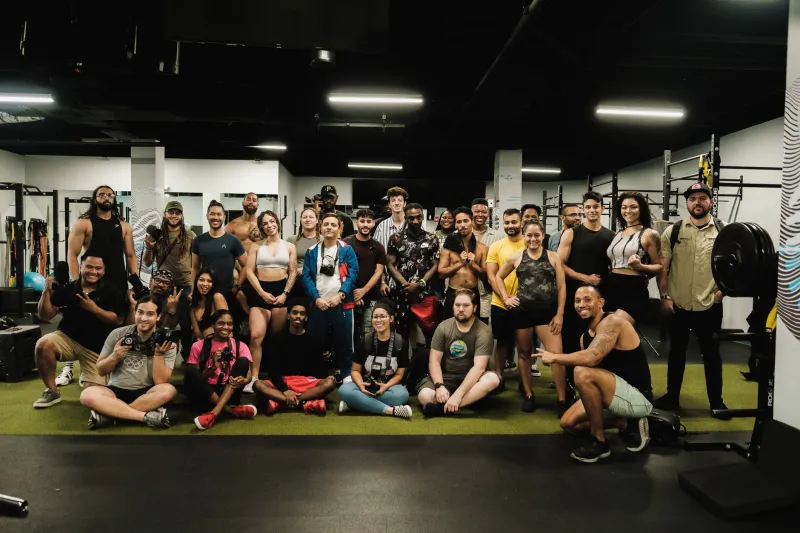
You remember when this gym had maybe forty members on a good day. You remember the owner's dog sleeping near the front desk, the hand-written whiteboard WODs, the way everybody knew everybody's name and their injury history and their weird pre-workout rituals. You were part of something small and scrappy and real.
Now there's a waitlist for classes. The front desk has a tablet check-in system. The parking lot is full by 6 a.m. And you're standing in the middle of all this growth feeling something you didn't expect to feel: a little bit lost.
This is the gym breakup nobody talks about — not the kind where you cancel your membership and walk out the door, but the slower, stranger kind where you stay and the place changes around you.
Growth Is the Goal, Until It's the Problem
Every gym owner dreams of the packed schedule, the buzzing energy, the community that takes on a life of its own. And when it happens, it's genuinely worth celebrating. A gym that grows means more people are finding what you found — that third place between work and home where you can show up, sweat, and feel like you belong somewhere.
But here's the thing about growth: it doesn't distribute evenly. The people who were there in the early days, who helped shape the culture just by showing up consistently, don't automatically get to stay at the center of it. Communities evolve. New cliques form. Inside jokes shift. The gym that once felt sized exactly to you starts to feel like a shirt you've outgrown — except in this case, the shirt got bigger and you somehow feel smaller inside it.
That's a disorienting experience, and it deserves to be named for what it is.
The Invisible Labor of Being a Founding Member
Long-timers carry something that newer members don't always see. You were there when the community was being invented — when norms were still being negotiated, when the culture was wet cement. Your presence helped set it. That's real, meaningful labor, even if it was never formal or acknowledged.
When a gym grows fast, that history can get buried under momentum. New members arrive with their own energy, their own social networks, their own way of doing things. The culture doesn't disappear, but it dilutes. And the people who remember the original recipe sometimes feel like they're watching something precious get watered down — even when, objectively, what's happening is wonderful.
This is where the grief lives. Not in something being taken away, exactly, but in something being outpaced.
What "Outgrowing" Actually Means
It's worth being precise here, because "the gym outgrew me" can mean a few different things.
Sometimes it means the programming has shifted — maybe what was a powerlifting-heavy box has added yoga, spin, and recovery classes to serve a broader audience, and you miss the old focus. Sometimes it means the vibe has changed — a quieter, heads-down gym has become louder and more social, or vice versa. And sometimes it just means the people you bonded with have moved on, and the new crowd hasn't filled that gap yet.
Each of these is a different problem with a different solution. The programming shift might mean it's time to have an honest conversation with the owner, or to find a complementary space that fills the gap. The vibe change might just need time — new communities take a while to find their rhythm. The friendship gap is probably the most painful, and also the most common.
When your gym friends move away or phase out, the gym doesn't just feel different socially. It feels physically different. The same equipment, the same layout, and somehow an entirely different place.
The Complicated Pride of Watching Something Succeed
Here's the part that makes this so emotionally tangled: you probably feel proud, too. You were there. You're part of the reason this community is what it is. When the gym wins — when it gets written up locally, when it hits a membership milestone, when it spins off a second location — there's a real sense of ownership in that success.
Pride and grief can coexist. You can be genuinely happy that this place is thriving and simultaneously mourn the version of it that existed when it was just yours. Both things are true. Neither cancels the other out.
The mistake is letting that grief curdle into resentment — toward the owner for growing the business, toward new members for showing up, toward the gym itself for becoming what it was always trying to become. That's a fast track to a bad relationship with a place that used to restore you.
How to Find Your Footing Again
If you're in this in-between space — not ready to leave, but not quite at home anymore — there are a few things worth trying before you write the whole thing off.
Reintroduce yourself. Genuinely. Not as the person who's been here since the beginning, but as someone who's curious about who else is here now. New members aren't replacements. They're just people who found the same thing you found, a little later.
Talk to the staff or owner. A good gym operator wants to know when long-timers are feeling disconnected. They may not even realize it's happening. That conversation, done without accusation, can actually shift things.
Take on a role. If you're feeling peripheral, find a way to be useful. Mentor a newer member. Help organize a community event. Volunteer to help with something. Contributing actively is almost always the fastest route back to feeling like you belong.
Give it a real timeline. Not an open-ended wait, but a defined one. Tell yourself you'll genuinely try for two more months before making any decisions. Sometimes the discomfort is just adjustment lag, and it passes.
A Growing Gym Is a Living Gym
The alternative to a gym that changes is a gym that doesn't — and gyms that don't change tend to close. The empty parking lots, the equipment that never gets upgraded, the owner who can't make rent. That's the other ending, and it's worse.
A community that grows beyond its original members isn't a community that failed them. It's a community that worked. The roots held. The thing you helped plant became a tree big enough that other people wanted to sit under it.
That's worth something. Even when it stings a little.
Your gym didn't break up with you. It just got bigger than the two of you. And figuring out who you are in this new, louder, fuller version of the place you love — that's its own kind of rep. Worth putting in the work.