Between the Reps: Why the Gym Floor Is Where People Finally Say the Thing They've Been Holding In
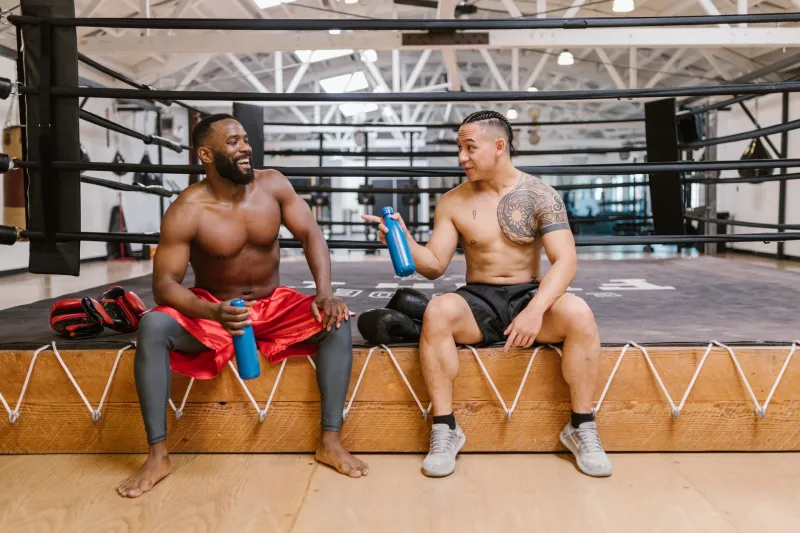
Nobody walks into the gym planning to get vulnerable.
You've got your playlist loaded, your pre-workout kicking in, maybe a mental checklist of what you're hitting today. The last thing on your mind is saying something real to the person on the cable machine next to you. And yet — it happens. Quietly, unexpectedly, in the middle of a Tuesday evening at a gym that smells like rubber and dry shampoo, someone says something honest. And the whole shape of their day — maybe their whole week — shifts.
It's one of the stranger social phenomena hiding in plain sight at places like this. The gym, for all its noise and motion and performative effort, is quietly one of the most emotionally available spaces in American daily life. And a lot of people don't realize that until it happens to them.
The Setup Nobody Talks About
There's a particular kind of social pressure that follows us through most of the day. At work, you perform competence. At home, you manage relationships. Even at a coffee shop — the original "third place" — there's a low hum of self-presentation, of being seen in a certain light.
The gym disrupts all of that.
You're already physically uncomfortable. You're already breathing harder than you'd like. You're wearing clothes that don't flatter anyone during a deadlift. The social armor is, quite literally, a little harder to maintain. And that creates something rare: a space where the usual performance starts to slip.
Add to that the rhythm of rest periods — those 60- to 90-second windows between sets where you're not doing much of anything except existing — and you've got a setup that's almost engineered for accidental honesty.
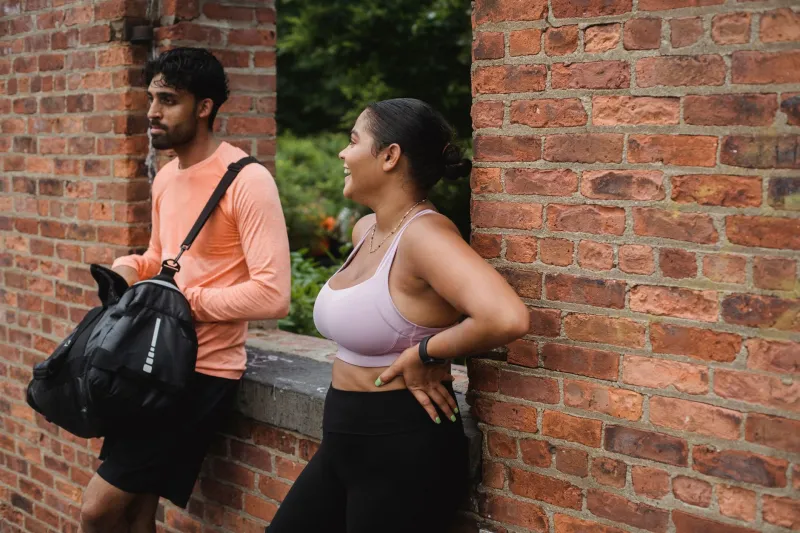
"I think there's something about not having to make eye contact the whole time," says Marcus, a 38-year-old who's been training at the same independent gym in Columbus for six years. "You're both looking at the mirror, or the floor, or wherever. It takes some of the pressure off. And then stuff just... comes out."
When "How Are You" Stops Being Rhetorical
Most of us have been trained to answer that question on autopilot. Good. Busy. Can't complain. It's a social handshake, not a real inquiry. But inside a gym where people see each other three, four, five times a week — where they've watched each other fail lifts and celebrate PRs and show up through breakups and job losses — the question sometimes lands differently.
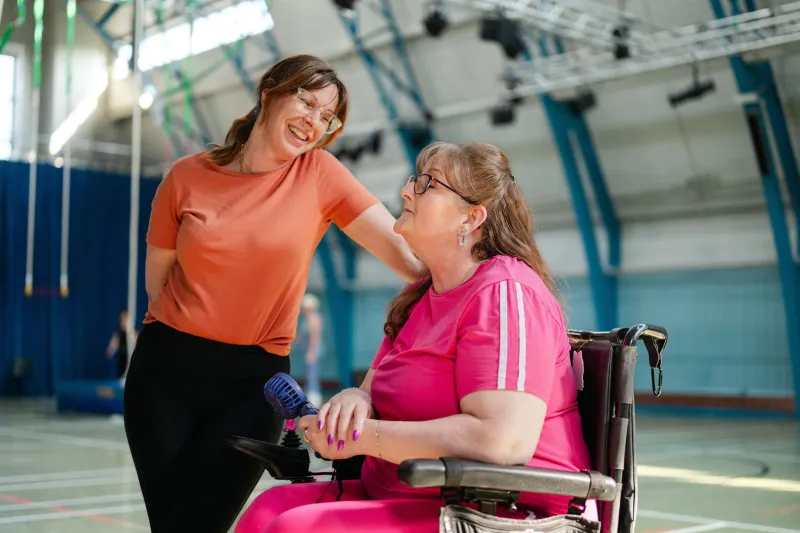
Jenna, a 44-year-old nurse from outside Nashville, remembers the exact moment it happened to her. She'd been coming to her gym for almost two years, always friendly, always keeping it light. Then one morning, a woman she'd only ever exchanged small talk with looked at her and said, not as a pleasantry but as an actual question: *"Hey — you doing okay? You seem like something's off."`
"I burst into tears," Jenna says, laughing a little now. "Right there, in between the squat racks. I hadn't told anyone what was going on with my mom's health. Not my coworkers, not really my friends. And this woman I'd talked to maybe a dozen times just... saw it. And asked."
What followed was a twenty-minute conversation that stretched well past their workouts. It didn't fix anything. Jenna's mother's situation didn't change. But something in her did.
"I felt less alone in it," she says. "Which sounds simple. But when you've been carrying something by yourself for months, 'less alone' is actually enormous."
Why Gyms Are Uniquely Positioned for This
Psychologists who study social bonding point to something called parallelism — the idea that people open up more easily when they're engaged in a shared physical activity side by side, rather than sitting face-to-face. It's why therapists sometimes take sessions on walks. It's why some of the best conversations happen in cars.
The gym is, in many ways, the ultimate parallel environment. You're doing your own thing, but you're doing it near someone else who's doing their own thing. The shared effort creates a sense of mutual understanding without requiring direct confrontation. There's no spotlight. Nobody's performing for the other person.
And then there's the physicality itself. Exercise is one of the few legal, accessible tools we have for regulating emotional state. It moves stress hormones through the body. It quiets the noise. For a lot of people, the gym is already the place where they go to feel more like themselves — which means their guard is often lower there than anywhere else.
"People come in here carrying stuff," says Derek, who coaches at a strength gym in Phoenix and has been doing it for over a decade. "I've had members tell me things on the floor they haven't told their spouses. And it's not because I'm special. It's because they're here, they're moving, and something in the environment makes it feel safer to say it out loud."
The Weight of Being the One Who Listens
Of course, this dynamic comes with its own complexity. Not everyone who works out regularly signs up to be a sounding board. And there's a real difference between a gym that cultivates genuine community and one that just happens to share square footage.
The best gym communities seem to develop an informal culture of attentiveness — not intrusiveness, but presence. People notice when a regular is off. They check in without prying. They've learned, through years of showing up together, how to read the room.
That's not something you can manufacture with a motivational quote on the wall. It grows out of consistency, out of showing up repeatedly in the same space with the same people until something real takes root.
Marcus puts it plainly: "At some point, these people know you. Not your whole life, but they know your face when you're struggling. And that matters more than most people admit."
What Happens After
The conversations that crack something open don't usually end with a resolution. Nobody gets their problems solved between the lat pulldown and the leg press. But they often end with something quieter and more durable: the feeling of having been witnessed.
For Jenna, the woman from the squat rack became a genuine friend. They still train at the same gym. They've had dinner. They've checked in on each other through hard seasons.
"It all started because she just asked a real question," Jenna says. "And I think about that a lot. How much it costs to actually ask. And how much it can mean when someone does."
There's a reason places like this — gyms that take the "community" part seriously — keep coming up in people's stories about turning points in their lives. Not because lifting weights is magic. But because showing up somewhere consistently, around people who show up too, creates the conditions for something human to happen.
Sometimes that thing is a PR. Sometimes it's a friendship. And sometimes, on an unremarkable Tuesday, it's the conversation you didn't know you needed — the one that starts with a casual "how's it going" and ends with you finally telling someone the truth.