The Day You Became the Spotter: How One Small Moment Rewrites Your Whole Gym Identity
You remember your first few weeks at the gym. The unfamiliar equipment, the unspoken rules you hadn't learned yet, the mild anxiety of not knowing whether you were doing anything right. Maybe you asked someone for a spot and felt a little embarrassed about it. Maybe someone offered one before you could even ask, and you felt simultaneously relieved and self-conscious.
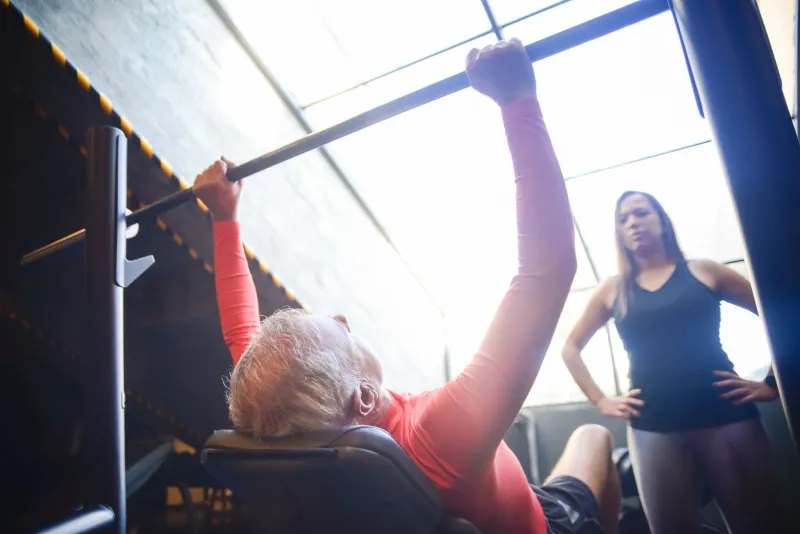
Now fast-forward a few months. You're between sets, minding your own business, and you notice someone at the bench press — plates loaded, no partner nearby, a look on their face that you recognize immediately because you wore it yourself not long ago. And without overthinking it, you walk over.
"Hey, you need a spot?"
Three words. No big deal. Except it kind of is.
What Actually Happens in That Moment
Spotting someone for the first time isn't just a physical act. It's a social and psychological handoff that most people don't fully process until they're already in the middle of it.
When you step in as a spotter, you're accepting responsibility for another person's safety. That's not nothing. You're saying, without using words, I've got you. And the weight of that — both literal and figurative — does something to how you see yourself in the space.
Psychologists who study group belonging talk about the difference between being a recipient of community and being a contributor to it. For a long time in any new environment, you're mostly receiving: taking cues from regulars, benefiting from the culture others built, absorbing the norms. The shift from receiver to contributor is the moment you stop being a visitor and start being part of the place.
Spotting someone is one of the clearest, most concrete versions of that shift you'll find anywhere in gym culture.
The Confidence You Didn't Know You'd Built
Here's the thing nobody tells you about the first time you spot someone: you probably weren't sure you were ready. You might have second-guessed yourself for a half-second before walking over. Do I actually know what I'm doing well enough to help someone else?
The fact that you did it anyway says something. It means you've internalized more than you realized — the form cues, the safety instincts, the general awareness of what good movement looks like. Offering to spot is, in a weird way, proof to yourself that you've been paying attention.
And the person you spot? They're not evaluating your credentials. They're just glad someone showed up. That mutual trust — offered and accepted between two people who might not even know each other's names — is a surprisingly powerful thing to be part of.
The Relationship That Follows
Spotting someone creates an instant, if temporary, bond. You've shared something real: a moment of physical vulnerability on their end, and a moment of quiet responsibility on yours. That's not the same as making small talk near the water fountain.
In a lot of cases, the person you spot becomes someone you nod to. Then someone you check in with. Then, eventually, someone whose name you actually know. The gym floor is full of relationships that started exactly this way — not with an introduction, but with a lift.
This is part of what makes gym friendships feel different from the ones you make at networking events or work happy hours. They're built on something physical and real. You were there when someone needed backup. They remember that, even if neither of you ever says it out loud.
At Third Place Gym, we've heard this story from members more times than we can count. The spotter becomes a regular. The regular becomes someone others look to. The chain keeps going, and the community gets a little more solid every time.
Why It Marks a Shift in Fitness Identity
There's a concept in social psychology called identity fusion — the point at which your personal identity and your group identity start to overlap. For gym members, it rarely happens all at once. It's gradual. A series of small moments that accumulate until one day you realize you don't think of yourself as someone who goes to the gym, but as someone who belongs there.
Spotting someone is one of those accumulation points. It's the moment you stop thinking of the gym as a service you're paying for and start thinking of it as a place you have a stake in. You're not just using the community — you're holding some of it up.
That shift matters for long-term consistency, too. Research on habit formation and exercise adherence consistently shows that social integration is one of the strongest predictors of whether someone keeps showing up. Not motivation. Not goals. Connection. When you feel like the gym needs you there — even in a small, informal way — you're a lot less likely to quietly cancel your membership after a rough month.
You Don't Have to Be an Expert
One of the reasons this moment gets overlooked is that people assume spotting is something only experienced lifters do. That you have to earn the right to help someone else.
That's not really how it works.
Spotting someone on a bench press doesn't require a certification. It requires attention, presence, and a basic understanding of what you're watching for. Most beginners have more of that than they think, especially once they've been training for a few months. The willingness to show up for someone else is the main qualification.
If you've been waiting until you feel ready to step in and help, you're probably already there. The gap between knowing enough and acting on it is mostly mental.
The Quiet Infrastructure of Every Good Gym
Every gym that feels genuinely welcoming — the kind where people stick around, where new members don't disappear after six weeks, where the regulars actually know each other — runs on this kind of informal mutual support. Nobody's in charge of it. Nobody scheduled it. It just happens because enough people decided, one moment at a time, to show up for each other.
The first time you spot someone is your entry point into that infrastructure. It's the moment you go from spectator to participant in the actual social fabric of the place.
And honestly? It tends to feel better than hitting a new max. The PR is yours alone. The spot belongs to both of you.